
Beginner’s Guide: 10 Practical Ways to Start Investing in Real Estate in Kenya (Ranked from Easiest to Most Complex)
Real estate is one of the most trusted and proven wealth-building strategies in Kenya. Whether you are starting with KES 5,000 or you have millions, there is always an entry point.
The biggest challenge for most beginners is knowing where to start, how much is needed, and what options are the safest when you are new.
This guide explains 10 practical and realistic ways to start investing in real estate in Kenya, ranked from easiest → most complex, with realistic starting capital and local examples.
1. Real Estate Investment Trusts (REITs) — Easiest & Lowest Capital
REITs allow you to invest in Kenyan real estate without buying physical property. You simply buy units (like shares) on the Nairobi Securities Exchange.
Why REITs are great for beginners:
Start with very little money
Very passive — no land issues, no construction, no tenants
Easy to buy and sell
How much is needed: KES 5,000–50,000 to buy a few units.
Examples in Kenya:
ILAM Fahari I-REIT (income-focused)
Acorn Student Accommodation REITs (I-REIT & D-REIT)
Where to buy: Through a stockbroker, investment app, or regulated digital investment platforms.
2. Property Unit Trusts / Real-Estate Mutual Funds
These are professionally managed funds that invest in property projects, listed property companies, or rental portfolios.
Why beginners like them:
Low capital
Diversified
Very passive
Start-up capital: KES 5,000–100,000
Examples: ILAM, Stanlib, and other regulated fund managers offer property-focused investment products.
3. Real Estate Crowdfunding Platforms
This is where many investors contribute money to a specific project — like student housing, rentals, or commercial property.
Why it’s popular:
Small entry ticket
You pick specific projects
Higher potential returns than savings accounts
Start-up capital: KES 5,000–200,000 depending on the platform.
Tip:
Always choose CMA-regulated platforms or those working with licensed REIT managers.
4. Fractional Ownership (Shared Ownership of a Property)
This model allows you to buy a percentage of a house or apartment instead of the whole unit.
Why it works:
Access to expensive properties at a lower price
Comes with professional property management
Ideal for student housing, Airbnb units, and serviced apartments
Start-up capital: KES 50,000–500,000+
5. Short-Stay Rentals (Airbnb / Serviced Apartments)
Here, you buy or lease a unit and furnish it for short-term stays.
Why it’s profitable:
Higher daily rates than long-term rentals
Strong demand in Nairobi, Mombasa, Naivasha, and tourist/business hubs
Start-up capital:
KES 200,000–600,000 if you are leasing and furnishing
KES 2.5M–10M+ if you are buying the unit
Tip:
Hire a reliable property manager if you don’t want the day-to-day stress.
6. Buy-to-Let (Long-Term Rentals)
This involves buying property and renting it out long-term — one of the most stable forms of real estate investing.
Why it’s reliable:
Steady rental income
Property appreciates over time
Banks offer mortgages to support buyers
Start-up capital:
KES 1.5M–10M+ depending on the location and deposit
Mortgages usually require 10–20% deposit
Where to invest:
Neighbourhoods near universities, hospitals, business hubs, new transport corridors, or fast-growing satellite towns.
7. Buying Land (Urban & Peri-Urban Plots)
This is the most common entry point in Kenya because land rarely loses value.
Why land is attractive:
Lower entry cost in peri-urban areas
Excellent long-term appreciation
You can build or resell later
Start-up capital:
KES 200,000–1,000,000 in emerging areas
KES 1,000,000–5,000,000+ in fast-growing zones like Limuru, Ruiru, Kitengela, and Juja
Tip:
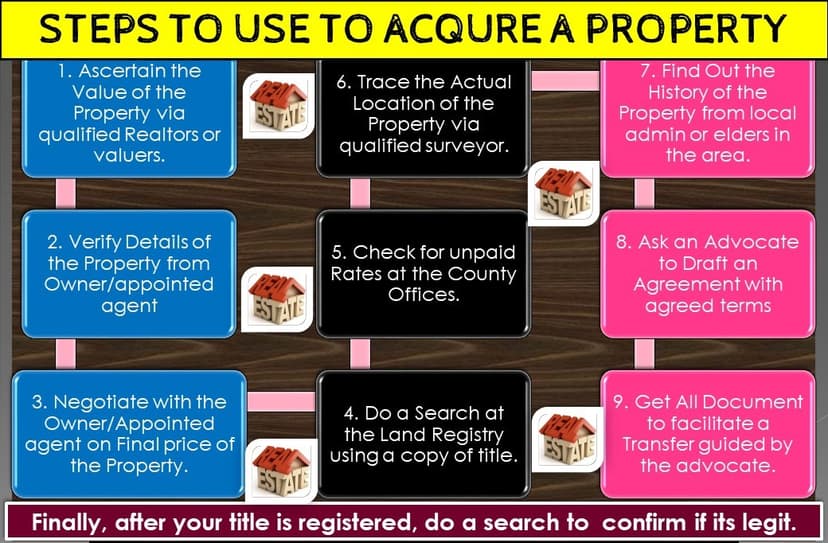
Carry out full due diligence — title search, ground verification, beaconing, seller background, and zoning.
8. Real-Estate Investment Groups (Chamas, Investment Clubs & Joint Ventures)
A group of people pool funds to buy land, invest in rentals, or develop apartments together.
Why it works:
Share risks and costs
Access larger or better projects
Builds collective investment discipline
Start-up capital: KES 500,000–5,000,000+ per member, depending on the project.
Important:
Always create written agreements on decision-making, withdrawals, profit-sharing, and timelines.
9. Fix-and-Flip (Buy, Renovate, and Sell for Profit)
This involves buying an old or undervalued property, renovating it, and selling it at a higher price.
Why it can be profitable:
Quick capital gains
Increasing demand for upgraded, modern units
Start-up capital:
KES 1.5M–10M+ including renovation costs
Skills required:
Negotiation
Project management
Strong market knowledge
Good contractor network
10. Real Estate Development (Build and Sell) — Most Complex
This is the highest level of real estate investing and involves:
Buying land
Doing architectural designs
Getting approvals
Financing construction
Selling or renting units
Start-up capital:
KES 5M–100M+ depending on the size
Most developers use equity + bank loans + off-plan sales
Why it’s rewarding:
Highest profit margins
Full control over design and pricing
Flexible scaling
Why it’s complex:
Requires experience, professionals, and strong cashflow
Regulatory approvals take time
Construction risk is high
Ranked Summary: Easiest → Most Complex Ways to Invest in Real Estate in Kenya
REITs (KES 5,000–50,000)
Property Unit Trusts (KES 5,000–100,000)
Crowdfunding Platforms (KES 5,000–200,000)
Fractional Ownership (KES 50,000–500,000)
Short-Stay Rentals (Airbnb) (KES 200,000–3M+)
Buy-to-Let (KES 1.5M–10M+)
Buying Land (KES 200,000–5M+)
Investment Groups / Joint Ventures (KES 500,000–5M+)
Fix-and-Flip (KES 1.5M–10M+)
Real Estate Development (KES 5M–100M+)
How to Choose the Best Starting Point (Beginner Tips)
1. Start with low-risk, low-capital options.
REITs and crowdfunding are ideal for learning while your money grows.
2. Build your knowledge.
Learn about titles, zoning, basic due diligence, construction costs, and market trends.
3. Grow slowly and consistently.
Move from REITs → land/ rentals → development as your capital and experience grow.
4. Always verify before paying.
Do title searches, confirm approvals, and verify developers on eCitizen and the Lands Registry.
Final Thoughts
Real estate in Kenya offers multiple paths — whether you want fully passive investing or hands-on development. The key is starting with what you can afford today, building experience, and scaling slowly.